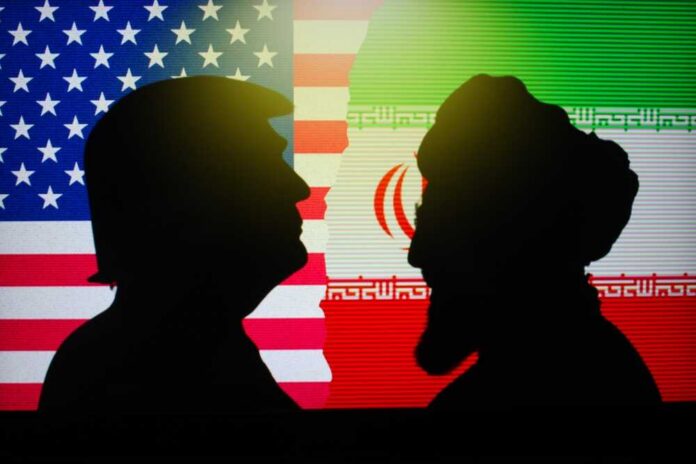
A viral “China’s Nostradamus” narrative is colliding with a real U.S.-Iran war—raising hard questions about who is shaping the public story as the shooting intensifies.
Story Snapshot
- Professor Xueqin Jiang, a Chinese-Canadian educator with a large YouTube following, is being spotlighted for 2024 predictions that included Trump’s re-election and a U.S.-Iran war.
- Tabloid coverage says a U.S.-Israel campaign dubbed “Operation Epic Fury” began Feb. 28, 2026, and reportedly killed Iran’s Supreme Leader Ali Khamenei, triggering Iranian retaliation.
- Jiang argues Iran is positioned to outlast the U.S. in a war of attrition, citing geography, long preparation, and pressure tactics around the Strait of Hormuz.
- Reporting also notes political controversy over war powers, with criticism that major strikes were undertaken without Congress.
How a YouTube “Predictor” Became a Wartime Talking Point
Professor Xueqin Jiang is being branded online as “China’s Nostradamus” after public claims that he accurately forecast Donald Trump’s 2024 election win and a subsequent U.S.-Iran conflict. According to coverage, Jiang built a large audience on his “Predictive History” channel by presenting pattern-based historical analysis rather than mystical prophecy. That distinction matters: the media framing sells certainty, while the underlying method is interpretation and analogy, not verified intelligence.
The recent attention stems from tabloid-style stories that treat Jiang’s earlier commentary as a scoreboard: two hits, and now a third prediction under test—his claim the U.S. will lose. The available reporting does not provide independent, primary documentation for many battlefield details beyond what those outlets state. Readers should separate confirmed, public events—like Trump’s return to the White House—from wartime claims that require higher-grade confirmation than viral clips and sensational headlines.
What the Reports Say Happened: “Operation Epic Fury” and Escalation
The timeline described in the reporting says the U.S. and Israel launched “Operation Epic Fury” on Feb. 28, 2026, striking Iranian nuclear and missile-related targets. Those reports also claim the strikes killed Iran’s Supreme Leader Ali Khamenei and triggered immediate Iranian retaliation, including missiles aimed at Israel, U.S. positions, and Gulf-linked infrastructure. As of mid-March 2026, the same coverage says aerial bombardments continue without a clear end state.
Because the most-cited accounts come from tabloids, the key limitation is verification. The story elements appear consistent across the outlets listed, but consistency is not the same as confirmation. Even so, the strategic outline described—early decapitation-style targeting followed by retaliatory strikes and energy-market disruption—fits what policymakers fear most in the region: a conflict that can expand fast and punish American families at the gas pump, regardless of battlefield “wins” on day one.
Attrition, Hormuz Pressure, and the High Cost of “Winning”
Jiang’s central argument is that Iran does not need to “defeat” the U.S. in a conventional sense; it needs to endure, impose costs, and leverage geography. The reporting highlights claims that Iran prepared for this scenario for decades and can use economic warfare—particularly pressure around the Strait of Hormuz—to strain U.S. staying power. One cited detail says the Hormuz route is critical to Gulf supply lines, amplifying the global shock when disrupted.
Trump is reported as emphasizing “safety and peace” even as the conflict drives oil volatility, with one account quoting him describing price spikes as a “small price to pay.” That political framing may resonate with voters who prefer strength abroad, but it also collides with a basic pocketbook reality: sustained disruption fuels inflation and punishes retirees on fixed incomes. If this becomes a prolonged campaign, voters will demand clarity on objectives, duration, and measurable endpoints.
War Powers and the Constitutional Tension at Home
One of the most consequential threads in the coverage is not Jiang’s prediction but the constitutional question it raises. The reporting describes criticism that the president bypassed Congress in launching major strikes, with detractors calling the move “illegal.” The sources provided do not detail any formal authorization votes or specific legal memos, so the article record here is incomplete. Still, the concern is straightforward: large-scale war making without Congress tests the separation of powers.
For conservatives who spent years watching unelected bureaucracies expand their reach, the war-powers angle should not be an afterthought. A presidency strong enough to launch far-reaching operations without clear congressional buy-in is also a presidency strong enough to ignore voters on other issues later. The constitutional fix is not partisan: Congress should debate, authorize, and oversee—especially when Americans face escalating costs, potential blowback, and an open-ended timeline described in public reporting.
Sources:
Man dubbed ‘China’s Nostradamus’ shared his honest prediction on US-Iran war
‘Chinese Nostradamus’ claims he knows how Iran US war will end in explosive prediction