As Israel orders mass evacuation of Gaza City, tens of thousands face repeated displacement, famine, and a deepening humanitarian crisis, fueling outrage over government overreach and the erosion of basic human rights.
Story Snapshot
- Israeli military expands offensive, ordering Gaza City residents to evacuate south.
- Over 82,000 people were displaced in late August alone, many unable to escape due to lack of resources.
- Designated a “humanitarian area” already overcrowded and suffering from aid delivery blockages.
- Humanitarian agencies warn of catastrophic consequences as urban infrastructure collapses.
Evacuation Orders Escalate Humanitarian Crisis
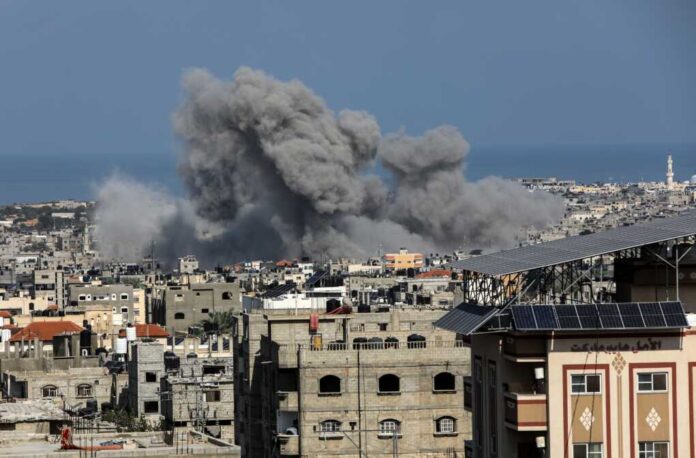
The Israeli military has intensified its offensive in Gaza City, distributing evacuation leaflets and ordering residents of high-rise towers to move south to a designated “humanitarian area.” This action comes after nearly two years of war that have left Gaza City, once home to almost one million people, devastated by repeated military operations. The urgency and scale of the evacuation highlight the logistical and ethical challenges faced by civilians, who now endure compounded threats of famine, overcrowding, and limited access to basic necessities. Many lack the means or safe routes to relocate, and the declared humanitarian zone in Muwasi is already overwhelmed and under-resourced, exacerbating the crisis.
“For your safety, you are required to immediately evacuate southward.”
Israel warns Palestinians to leave Gaza City areas as ground operations intensify. pic.twitter.com/P5Hbq95FyG
— Fox News (@FoxNews) September 6, 2025
Background: Blockade, Displacement, and Ongoing Conflict
Since 2007, the Gaza Strip has lived under Israeli blockade following Hamas’s takeover, resulting in recurrent conflicts, civilian casualties, and destruction of essential infrastructure. The current escalation marks one of the deadliest periods in Gaza’s history, with ongoing hostilities between Israel and Hamas focusing on strategic urban strongholds like Gaza City. Previous Israeli offensives targeted northern Gaza, forcing waves of displacement. Chronic shortages of food, water, and medical supplies have persisted due to both conflict and blockade, and many residents have been forcibly relocated multiple times, facing the compounded trauma of repeated displacement and deteriorating conditions.
Stakeholders: Military Strategy and Civilian Survival
Key actors include the Israeli military (IDF), which seeks to neutralize Hamas capabilities and secure strategic areas, the Palestinian civilians facing dire humanitarian challenges, and Hamas, which maintains control and uses urban infrastructure for military purposes. Humanitarian agencies such as the United Nations OCHA and UNRWA work to provide aid and monitor the situation, but their capacity is constrained by security concerns and restricted access. The Israeli government, led by Prime Minister Netanyahu, directs military strategy and public messaging, while international actors have limited influence in alleviating the unfolding crisis. Civilians remain caught between military objectives and survival needs, as asymmetrical power dynamics play out in the densely populated urban environment.
Recent Developments: Intensified Operations and Aid Blockages
In early September, Israeli forces struck high-rise buildings in Gaza City, citing Hamas surveillance activities, and issued mass evacuation orders. These orders have triggered a surge in displacement, with over 82,000 new evacuations recorded between August 14 and 31, including nearly 30,000 moving from north to south. Despite the designation of Muwasi as a humanitarian area, its overcrowded conditions and restricted aid delivery have left many without adequate shelter or resources. Ongoing strikes on residential and medical infrastructure further jeopardize civilian safety, and humanitarian agencies warn of “horrific” consequences if the offensive continues. Many civilians remain unable to evacuate due to disabilities, lack of resources, or fear of further violence.
Impact Analysis: Short- and Long-Term Consequences
Immediate risks include mass civilian casualties, overcrowding in designated areas, and the breakdown of essential services. Aid delivery is severely disrupted, worsening the famine and health crises. Long-term consequences may involve deepening trauma, destruction of Gaza’s urban infrastructure, and entrenched political divisions that stall any prospects for peace. Vulnerable groups such as the elderly, disabled, and children are disproportionately affected, and humanitarian workers face operational risks amid collapsing local economies and public services. The crisis has heightened regional tensions and intensified scrutiny of Israeli actions, while the humanitarian sector struggles to respond to escalating needs under severe resource constraints.
Sources:
Israel Gaza City Operation Expands as Israeli Military Orders Mass Evacuation
UN News: Gaza City Mass Evacuation Raises Catastrophic Humanitarian Concerns