
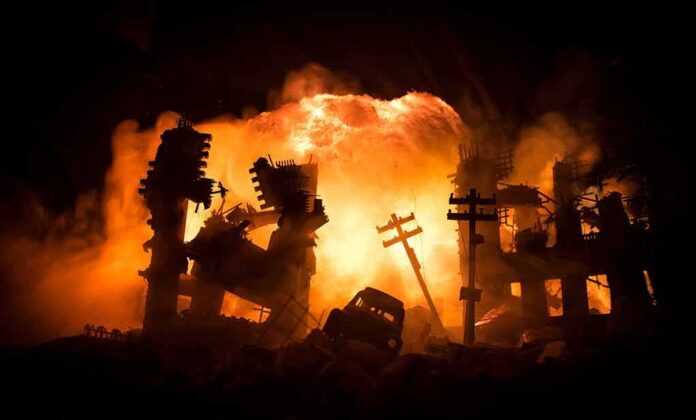
Hours after President Trump declared an immediate “energy cease-fire,” Ukraine said Russian strikes hit power plants in Kyiv and Kharkiv.
Story Snapshot
- Trump announced an immediate energy cease-fire and said both sides agreed.
- Zelenskyy said Ukraine would support the pause if Russia stopped attacks.
- Ukraine reported strikes on a Kyiv power plant and Kharkiv energy sites after the announcement.
- Major outlets noted no immediate confirmation from Moscow on the agreement.
What Trump Announced And Why It Mattered
President Trump posted that an “energy cease-fire” between Russia and Ukraine took effect “immediately,” and warned, “Do not break it!” The statement did not include written terms, timelines, or how both sides would verify compliance. The message aimed to pause attacks on energy systems that power cities and industry. That goal speaks to basic needs: heat, light, and jobs. It also tracks with past efforts to cool strikes on power plants that hit civilians hard.
Ukraine reacted within hours. President Volodymyr Zelenskyy said Ukraine backed the idea and would stop hitting Russian refineries if Russia stopped hitting Ukraine’s energy grid. He then said Russian forces struck a power plant in Kyiv and later hit energy facilities in the Kharkiv region the same evening. Those claims set a clear sequence: public pause announced, Ukraine signals support, then reports of fresh hits on vital sites.
Reports Of Strikes After The Announcement
Ukrainian officials reported a strike on a Kyiv power plant that caused outages, followed by attacks on Kharkiv-region energy infrastructure later that day. Major outlets, including the British Broadcasting Corporation and the Associated Press, carried those statements from Zelenskyy and described the timing as coming after Trump’s post. The press also noted that details on the deal’s text and scope were not released at the time.
The Kremlin did not provide an immediate public confirmation matching Trump’s claim that both sides had agreed. Coverage highlighted that gap. It leaves open what Moscow believed the deal covered, when it started, and how it would be enforced. That matters because power sites include many types of facilities. Without a shared list, each side can claim a different set of rules and targets.
Why Energy Sites Are Central In This War
Power plants and refineries are soft targets with outsized effects. Hitting them cuts light, heat, and factory output. It also drives fear and raises repair costs that taxpayers bear for years. Ukraine has struck Russian oil facilities to limit fuel for the war. Russia has hit Ukrainian power assets to sap daily life and strain the grid. A pause on these strikes would lower civilian pain fast if both sides followed it.
This is not the first time such a pause was floated. Earlier in the year, a thirty-day pause was announced and quickly became a fight over alleged violations. Each side accused the other of breaking the rules, and the strikes resumed. The pattern is clear: leaders announce a narrow deal, but the sides differ on timing, targets, and proof. Without a watchdog or hotline, claims and counterclaims fill the void.
What This Means For Americans Watching At Home
Energy shocks abroad hit wallets here. When refineries burn or grids go down, oil and gas markets jump. That can raise prices for trucking, food, and home heat. Voters of all stripes feel it. Many also see big power plays made by a few leaders, with little public detail and no clear oversight. That feeds a common worry: deals are made and broken while regular people pay the bill in higher costs and more risk.
Ukraine president says Russia strikes energy facilities despite Trump claim of an energy ceasefire https://t.co/wOkRMvJX0r
— Chicago Breaking News (@ChicagoBreaking) October 12, 2026
This episode also shows how fast statements can outpace systems. A post can say “effective immediately,” but militaries run on plans, orders, and clocks. If there is no written text, no shared start time, and no referee, a cease-fire can fail on day one. That does not change the stakes. If Russia and Ukraine both stop hitting energy sites, lights stay on, businesses keep running, and fewer families are thrown into the dark.
Sources:
townhall.com, reuters.com, bbc.com, afp.com, bbc.co.uk, apnews.com