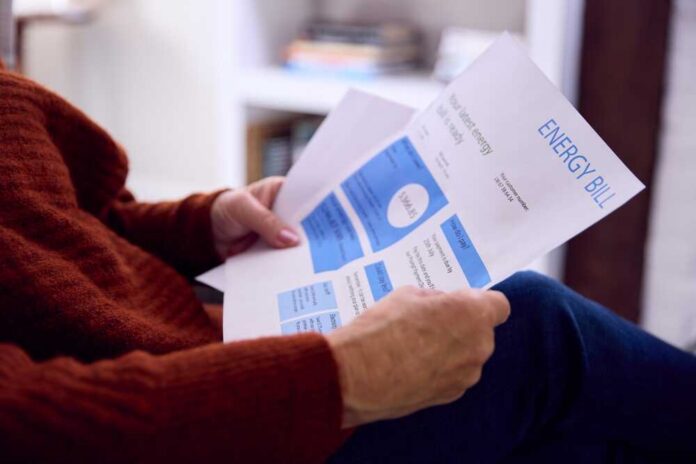
Your monthly electric bill might be the most powerful campaign ad of the 2026 midterms—and no one had to pay to print it.
Story Snapshot
- Electric rates jumped sharply in 2025 and are set to climb again, turning power bills into a kitchen-table political weapon.[1]
- Polls show voters now rank utility bills right alongside groceries as a top pain point in their household budgets.[2][4]
- Politicians are already fighting over who to blame: data centers, green mandates, fuel prices, or utility companies.[1][6]
- The party that explains these costs in plain English—and offers a credible plan to cut them—could flip key states in 2026.
Rising Power Bills Are Becoming The New Swing Voters
Voters in 2026 will walk into the booth carrying one number in their heads: the total on last month’s electric bill. Nationally, average retail electricity prices rose more than 7 percent in 2025, with some states seeing double-digit jumps, and analysts expect further increases heading into 2026.[1] That matters because, unlike an abstract inflation index, the power bill lands as a physical verdict on political leadership every thirty days. Households cannot easily dodge it, and they notice when it creeps up.
Pollsters now find that concern about electricity and heating costs sits just a notch below groceries and health care as a top cost-of-living worry.[2][4] In recent nationwide surveys, roughly two-thirds of bill payers say their utility costs went up over the last year, and a sizable share report that they rose “a lot.”[4] Among swing voters, nearly half say they are very concerned about electricity costs.[2] That combination—broad impact and intense frustration—makes utility bills a political tripwire that campaigns ignore at their peril.
What Actually Drives Your Bill Higher Each Month
Campaign rhetoric will search for one villain, but the grid does not work that way. Energy experts point to a tangle of drivers: higher fuel prices for power plants, costly grid upgrades, storm hardening after extreme weather, environmental compliance, and the explosive electric demand from new data centers.[1][5][6] In some regions, wholesale power prices themselves stay modest while “wires” charges spike because utilities are replacing aging lines, transformers, and substations. In others, rapid demand growth forces expensive new generation that ratepayers must finance.
Data centers are the newest and most visible target. Artificial intelligence facilities and cloud campuses consume huge amounts of power around the clock, and communities from Pennsylvania to Louisiana are learning that these loads can reshape local grids.[6] Some watchdog groups warn that long-term contracts with tech firms could lock ordinary customers into higher bills for decades. Yet bipartisan policy analysis also stresses that even without data centers, demand growth, electrification, and infrastructure fatigue would still push prices up.[5] Reality is a stack of costs, not a single scapegoat.
How Each Party Is Positioning Itself On Electricity Costs
Democrats see an opening to cast clean energy as the antidote rather than the culprit. Internal memos argue that voters increasingly view renewables as a way to stabilize prices over time by cutting reliance on volatile fuel markets.[2] Democratic strategists say their candidates gain traction when they frame themselves as watchdogs willing to confront monopoly utilities and demand rate relief for consumers.[2] That message leans on a populist instinct: people already blame the company sending the bill, so siding with “the little guy” comes naturally.
Republicans, for their part, lean on a different instinct—skepticism of heavy-handed mandates. Many conservatives argue that aggressive environmental rules, rushed coal and natural-gas retirements, and subsidies that distort market signals have made the grid more fragile and more expensive. They aim to tie rising bills to what they describe as ideological energy policy crafted far from ordinary families’ budgets. From a common-sense conservative standpoint, any plan that drives up essential costs in the name of virtue-signaling deserves tough scrutiny and, if necessary, repeal.
Why Simplified Blame Games Could Backfire With Voters
Every election cycle, a complex system gets hammered into a three-word slogan, and electricity is especially vulnerable to that flattening. Blaming only “greedy utilities,” “Biden’s green agenda,” or “Trump’s fossil favoritism” ignores how state regulators, fuel markets, storms, and local growth all mix into one line item.[1][5] Voters may not know the engineering, but many can sense when politicians talk to them like children. Over time, that gap between slogan and lived reality can generate quiet, angry defections.
Direct debit bill payment failures up 9% in the past year.
Electricity & gas bill failures surged 24%.
Universal Credit households now facing 11.7% failure rate on energy bills (vs 2.8% for everyone else). Britain’s poorest can’t even pay the basics.
📌ONS, 21 May 2026
— UK Decline (@UKDecline) May 21, 2026
Candidates who respect voters’ intelligence have a strategic edge. A credible message looks something like this: acknowledge that multiple forces push bills up, explain which levers elected officials actually control, and draw a straight line from specific reforms to household savings. That approach aligns with core conservative values of transparency, responsibility, and limited but competent government. Promise less, deliver more, and do not pretend Washington alone can rewrite the physics of the grid or the price of global fuel.
What Smart Candidates Will Propose Before November 2026
Serious contenders in both parties will put forward practical, not utopian, steps. These could include fast-tracking least-cost transmission upgrades instead of gold-plated projects, cracking down on utility spending that bloats rate bases without improving reliability, and demanding more competitive procurement for new power resources. Some will push targeted assistance so seniors and working families are not choosing between the light bill and prescription drugs, coupled with real accountability to avoid turning relief into another permanent entitlement.
The savviest campaigns will also talk about demand, not just supply. Simple, technology-neutral efficiency measures, better building codes, and time-of-use pricing can shave peak loads and reduce the need for the next billion-dollar plant or line. That is the kind of quiet, boring reform that rarely makes headlines but can save families more over a decade than any single tax rebate. By November 2026, the politicians who can tie such nuts-and-bolts ideas to the number at the bottom of your bill are the ones most likely to ride that bill all the way to Washington.
Sources:
[1] Web – How rising electric rates could affect the 2026 midterms | Brookings
[2] Web – POLLING MEMO: Utility Bills, Clean Energy, & Electoral Opportunity …
[4] Web – [PDF] UTILITY BILLS ARE RISING: Q1 2026 – PowerLines
[5] Web – Why Is Your Electric Bill Going Up? Understanding Changes in …
[6] Web – As Electricity Costs Rise, Everyone Wants Data Centers to Pick Up …