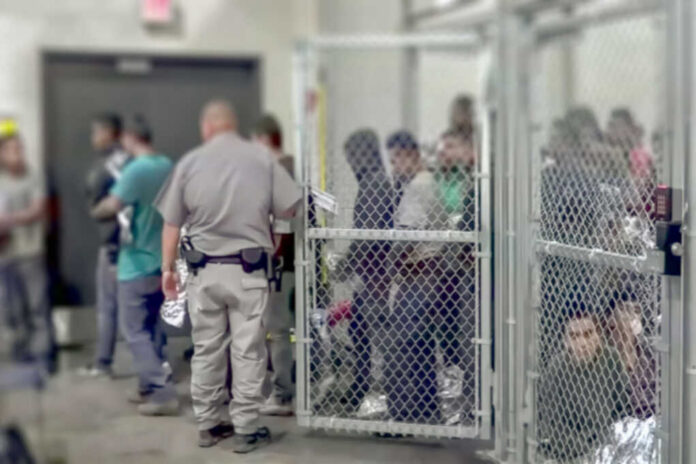
New reports claim the Trump administration “overpaid” for immigration detention warehouses, but the deeper story is shaping into a familiar Washington battle: urgent border enforcement needs colliding with media narratives that hint at corruption long before hard evidence appears.
Story Snapshot
- Reports claim the Department of Homeland Security paid well above tax-assessed values for detention warehouses in Utah and Georgia.[1][3]
- Critics suggest political favoritism and corruption, but no contracts, appraisals, or documented quid pro quo arrangements have been publicly produced.[1][2]
- Real estate experts note that tax assessments often differ sharply from actual market value, especially for specialized federal projects.[3]
- The warehouse expansion is tied to a much larger national fight over immigration enforcement, detention capacity, and catch-and-release policies.[3]
Media Reports Focus On “Overpayment” Allegations
Several left-leaning outlets have accused the Department of Homeland Security under President Trump of dramatically overpaying for industrial warehouses being converted into immigration detention facilities.[1][2]One widely circulated report claims a Salt Lake City warehouse was purchased for roughly $145.4 million — about 48 percent above its 2025 tax-assessed value of approximately $97 million.[1] Another report alleges a Georgia warehouse complex sold for around $130 million despite being assessed locally at closer to $29 million, fueling accusations of waste and insider favoritism.[2]
The Atlanta Journal-Constitution separately reported that more than one million square feet of warehouse space outside Atlanta sold for roughly $129 million while county tax authorities had valued the property at only $26 million earlier in 2025.[3]Critics quickly seized on those price gaps to imply corruption or political favoritism. But the reporting itself stops short of producing direct evidence that any Trump allies improperly benefited from the deals.[1][2][3]
Tax Assessments Are Not The Same As Market Value
One of the biggest missing pieces in the public debate is the difference between tax-assessed value and actual fair market value. County tax assessments are primarily designed for local taxation purposes and often lag behind real-world commercial pricing — especially for specialized properties tied to urgent federal infrastructure needs.[3] The Atlanta Journal-Constitution itself acknowledged that DHS relies on formal appraisals reviewed and approved by government appraisers when determining purchase prices, not simply county tax rolls.[3]
So far, none of the public reporting includes the underlying appraisals, internal government evaluations, closing documents, or procurement analyses tied to the deals.[3]Without those records, it remains impossible to conclusively determine whether the federal government truly overpaid, whether the properties required expensive retrofitting, or whether time-sensitive border enforcement demands drove prices higher in a competitive industrial market.[3]That distinction matters because dramatic headlines built solely around tax assessments can create a misleading impression without proving misconduct.
Claims Of Political Favoritism Remain Unproven
Some commentary surrounding the deals has attempted to connect the warehouse sales to wealthy investors or alleged Trump-connected figures.[1][2]However, the excerpts and reporting currently available do not provide verified ownership records, donor ties, internal communications, or evidence of any direct quid pro quo relationship involving President Trump, his family, or senior administration officials.[1][2]
In at least one instance, legal representatives cited in coverage explicitly denied that a named associate had any involvement in reviewing or managing the contracts.[1]That leaves much of the corruption narrative resting on speculation rather than documented proof. For conservatives who support both strong border enforcement and limited government accountability, that distinction is critical. Allegations of self-dealing should ultimately rise or fall based on records, contracts, communications, and financial evidence — not assumptions built around politically charged headlines.
The Bigger Fight Is About Immigration Enforcement
Behind the warehouse controversy sits a much larger political battle over whether the federal government should aggressively detain and remove illegal immigrants or return to looser catch-and-release policies.[3]Immigration and Customs Enforcement is reportedly expanding detention capacity nationwide, with plans tied to a broader network capable of housing tens of thousands of detainees.[3]
Officials argue that retrofitting large industrial warehouses allows the government to build detention infrastructure quickly while responding to ongoing border pressures.[3] Critics, however, view the entire detention expansion effort as morally wrong and financially excessive, often describing the facilities as “warehousing people.”[3]That ideological divide heavily shapes how the warehouse purchases are being covered. Supporters of stricter immigration enforcement argue that every attempt to expand detention capacity now faces automatic accusations of cruelty, corruption, or authoritarianism. Opponents argue the spending reflects unnecessary expansion of federal detention powers.
Transparency Still Matters
Even supporters of tougher border enforcement acknowledge that hundreds of millions of taxpayer dollars deserve close scrutiny.[1][3]The available reporting itself notes that broader market conditions may explain at least part of the Georgia price gap and suggests the transactions may not represent “meaningful” overpayment when commercial factors are fully considered.[3]That admission weakens some of the more explosive accusations currently circulating online and across partisan media. Still, the administration could reduce skepticism by releasing more documentation surrounding the purchases — including appraisals, procurement reviews, internal justifications, and contract details.
If those records ultimately show the government paid reasonable market rates under urgent operational conditions, the deals may be viewed as costly but necessary investments tied to restoring immigration enforcement capacity. If evidence later shows officials ignored warnings, inflated prices, or steered contracts toward insiders, then accountability would absolutely be warranted. For now, though, claims that the administration “massively overpaid” to enrich allies remain allegations — not proven facts.
Sources:
[1] Web – Kristi Noem hugely overpaid for a $145 million warehouse in one of …
[2] Web – Standing Up For Our Neighbors, DHS Overpays Russian $100m for …
[3] Web – ICE spent $200 million on two Georgia warehouses. Did the feds …